Winter- Program Application and Course Registration
Application for Winter 2027 are now open. Course registration for Winter is open for current Queen’s students and students currently registered in the program. Visit the student registration guide to learn how to
In today’s knowledge economy, success goes to those who can think critically and connect ideas across disciplines. Being able to anticipate change and understand how laws and regulations shape goals and strategies gives you an edge in any field.
A Foundational Understanding of Law
The Certificate in Law gives you a closer look at case law, statutes, and policies. You’ll explore the historical, social, economic, and environmental forces that shape the law, learn how to think like a lawyer, and practice developing and defending your own positions. You’ll also see how current domestic and international trends influence legal decisions today.
About the Certificate in Law
Designed and optimized for online learning to meet learning objectives anytime, anywhere
Courses are taught by Queen's Faculty of Law instructors and Teaching Assistants are current JD students
The program offers nine courses, each covering a unique aspect of Canadian law
Current Queen's students can count two courses as electives towards degree program
Apply as a non-Queen's Interest Law student - no supporting documentation is required
Benefits of the Certificate in Law
The Faculty of Law believes that understanding the law is essential for everyone, helping you navigate both personal and professional situations with confidence
Graduates receive priority review when applying to the Queen's Law Juris Doctor program
Professional development
Interested in pursuing law school
Learn more about Canadian Law
Stand out in a competitive job market. Anything you can do to distinguish yourself from other applicants will help
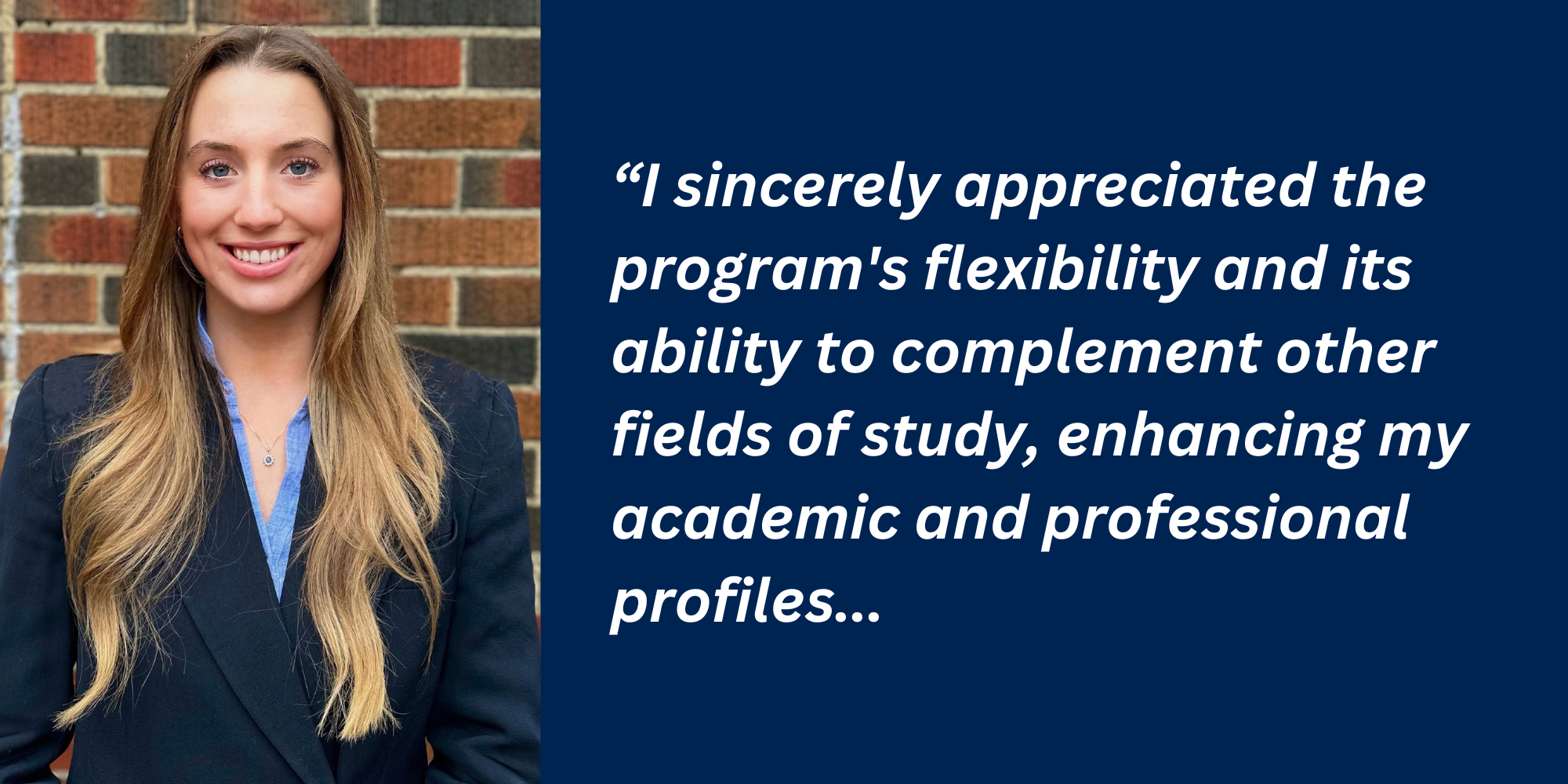
Aimee Lemire
I sincerely appreciated the program's flexibility and its ability to complement other fields of study, enhancing my academic and professional profiles. The program's relevance to real-world scenarios and its focus on critical thinking skills make it particularly appealing to myself as I aspire a career that is intertwined with law and governance.
Aimee Lemire
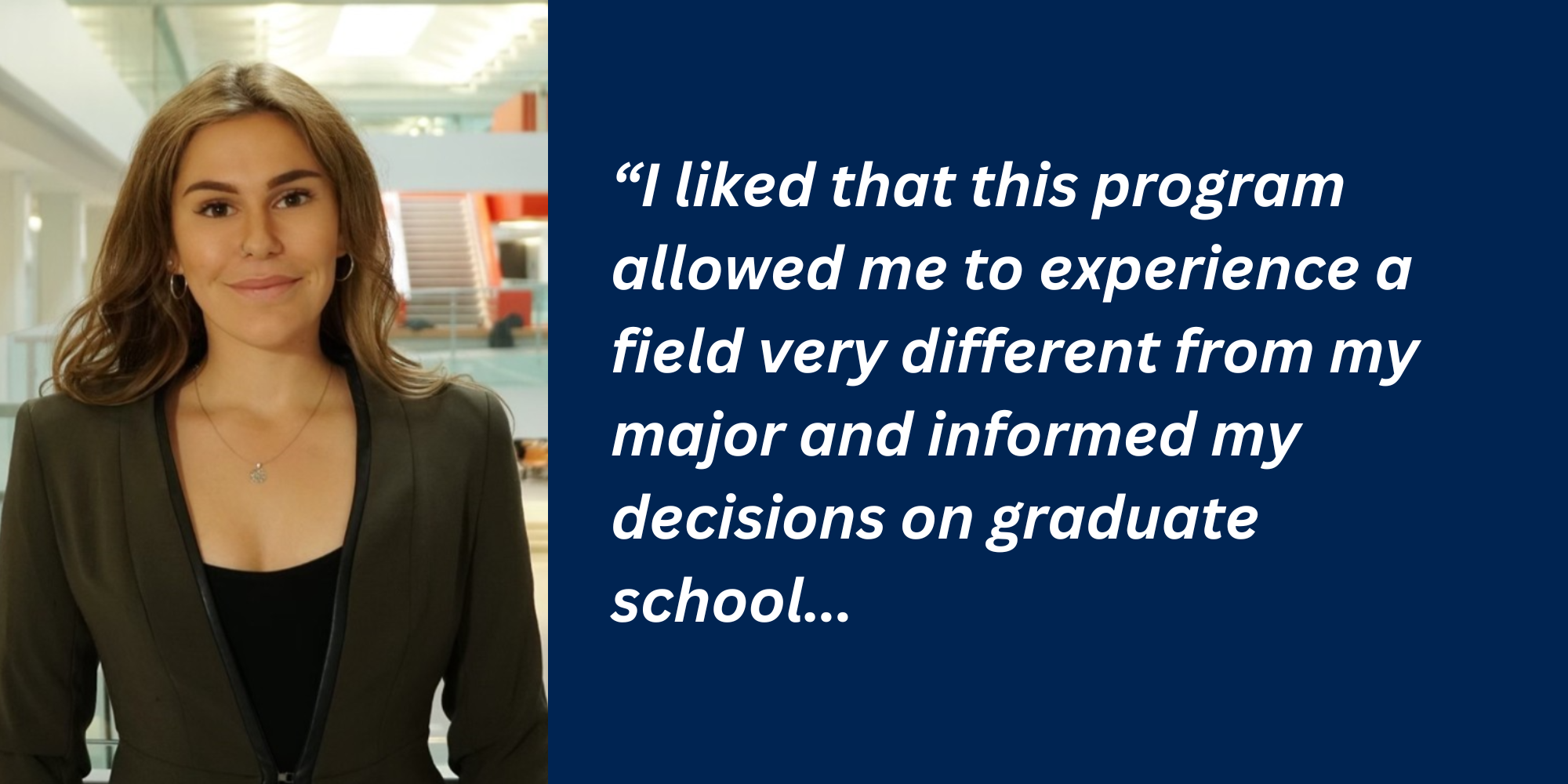
Erin Peterson
I liked that this program allowed me to experience a field very different from my major and informed my decisions on graduate school. I learned a great deal and was given the opportunity to experience interactions with people from all faculties. I am applying to law school with the hopes of making a difference in the field of Artificial Intelligence ethics.
Erin Peterson
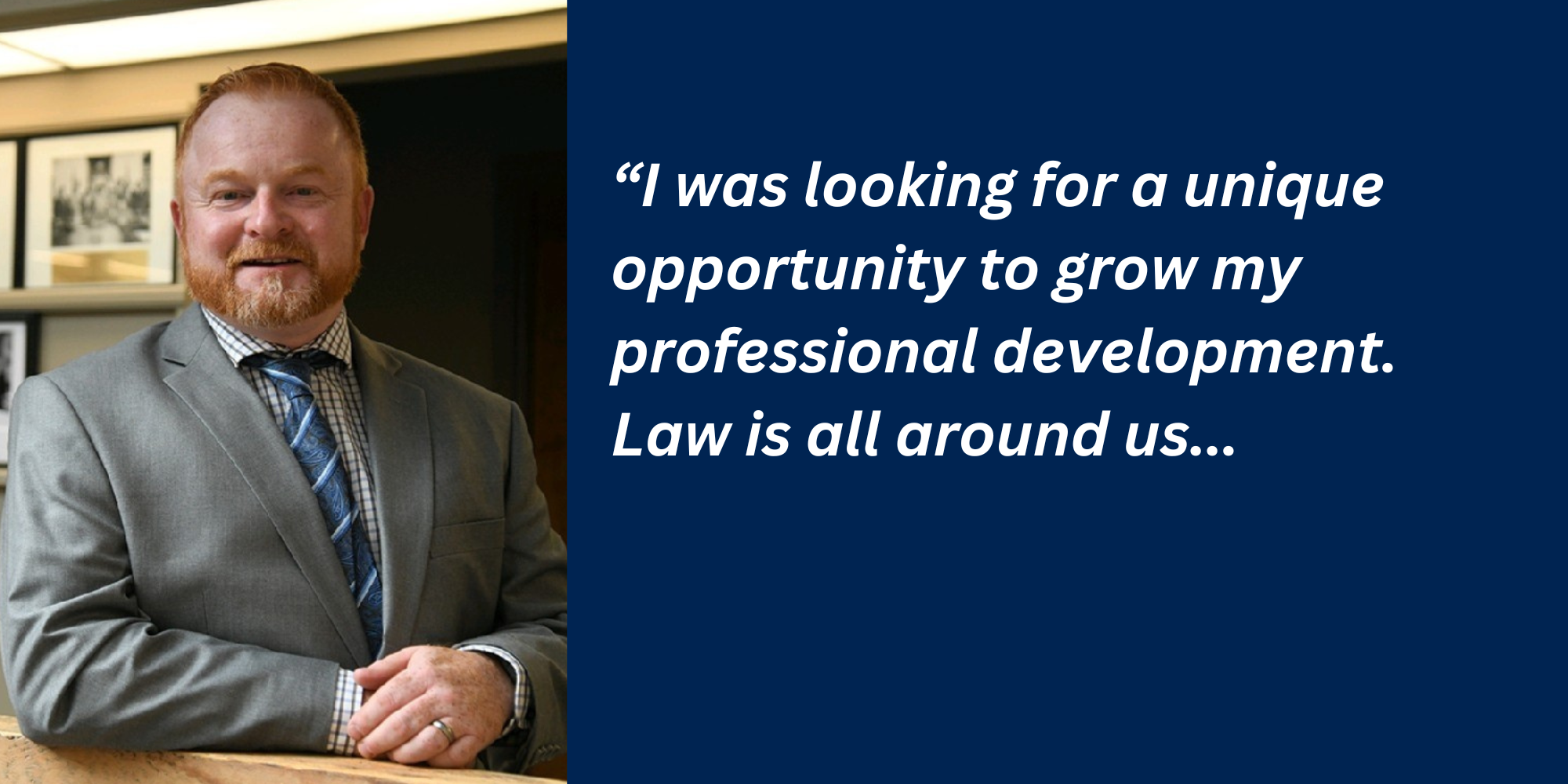
Joseph Reid
I was looking for a unique opportunity to grow my professional development. Law is all around us – from the contract that is formed from purchasing a cup of morning coffee, to our constitutional rights listed within the Charter of Rights and Freedoms – and it seemed to be the right fit for me. I have learned a phenomenal amount of knowledge by taking the Certificate in Law Program. I strongly recommend it to anyone who wants to add something to their resume and actually gain practical knowledge that effect all of us both professionally and personally.
Joseph Reid
Take any four courses to complete the Certificate in Law
The Certificate in Law is a part-time undergraduate program offered fully online. You may take individual courses to explore areas of interest or work toward completing the full certificate. While Law courses can be taken in any order, it is strongly recommended that you begin with Introduction to Canadian Law, as it provides a solid foundation and introduces key concepts covered in the other Law courses.
With nine courses to choose from, you only need to complete four courses (12 units) to earn the Certificate in Law.
To satisfy requirements for the Certificate in Law, you must:
Complete four of the nine available courses
Achieve a minimum final grade of "C+" in each course and maintain an overall GPA of 2.60
Program requirements can be completed before or after graduation
Course Level Requirements
For current Queen's undergraduate students:
Two Law courses at the 200-level (I.e. Law 201-700)
May count as electives towards your degree
Tuition is assessed at home faculty rate
Two Law courses at the 700-level (I.e. Law 701-700)
The 700-level courses do not count towards your degree but included in overall GPA
Tuition is assessed at Faculty of Law rate
Once you have completed a Law course, you cannot retroactively change a 700-level Law course to a 200-level Law course. Select your academic program (BAH, BCOM, BASC, NURS) when enrolling in Law courses at the 200-level in SOLUS.
NEW: Current Queen’s students may now complete more than two 200-level Law courses as electives towards your degree. Students can self-enroll in the first two Law courses. Any additional courses must be added by the Certificate in Law Program Coordinator (lawcertificate@queensu.ca) or by contacting your home faculty.
NOTE: If you apply to the Certificate in Law at a later time, only two 200-level Law courses will be counted toward certificate requirements, even if more were completed.
Substitution Courses
Students cannot receive credit for both COMM 382 and LAW 204/704
PHIL 318 may be substituted for one 200-level Law course
PHIL 318 and COMM 382 cannot replace a 700-level Law course.
One 200-level Law course can be substituted for either PHIL 318 or COMM 382 (current students only). To request that a substitution course be included on your academic record, students must email lawcertificate@queensu.ca.
Students must have completed first year of studies (minimum 18.0 units) before applying to the Certificate in Law. However students may enroll in 200-level Law courses during the summer term between first and second year.
Non-Queen's Interest Law Students
Non-Queen's Interest Law students must complete all four courses at the 700-level (I.e. Law 701) and will be assessed tuition at the Faculty of Law rate.
The Certificate in Law can be completed within one year. However, there is no fixed timeline - you may complete the four required courses over two or three terms, depending on what works best for you. Please note that the Certificate in Law is not intended as a pathway to courses in other faculties. Students are only eligible to enroll in Law courses associated with the program.
Tuition Fees/Payment Methods
Current Queen's students are assessed home faculty tuition fees for 200-level Law courses.
Below is a breakdown of the tuition fees for one 700-level Law course for current and non-Queen's interest students.
Domestic Tuition Fees
$1,156.50
Domestic Tuition Fees (outside of Ontario)
$1,446.96
International Tuition Fees
$3,594.24
All students are assessed a $10.00 Student Assistance Levy (SAL) fee that is applied per course. Further information on tuition fees and policies are located on the Office of the University Registrar website. Tuition is due September 1 for Fall term, January 10 for Winter term and May 1 for Summer term.
The Ontario Student Assistance Program (OSAP) is a financial aid program assisting students with the costs of post-secondary studies. For further information and to see if you are eligible for government student financial assistance, please visit Student Awards. NOTE: Non-Queen's Interest Law students are ineligible for financial assistance. If you want to apply, please contact the Law Certificate Program Coordinator at lawcertificate@queensu.ca.
Financial Aid - Other Provinces/Territories
To learn more and to see if you are eligible for government student financial assistance in other provinces or territories, go to Student Awards. Non-Queen's interest students are not eligible for financial assistance.
Law Course Offering Schedule
Law courses are offered throughout the academic year in Fall, Winter and Summer terms and may be subject to change.
Non-Queen's Interest Law students are not permitted to take the in-class version of Introduction to Canadian Law or any 200-level Law course.
Students must achieve a final grade of C+ (GPA 2.30) in each completed Law course
Students must achieve a minimum GPA of 2.60 to graduate from the Certificate in Law
If you do not meet academic progression in a Law course, you can re-take course or enroll in another Law course.
Certificate application dates
Fall termapplication is open June 1 - August 1 for courses starting in September
Winter termapplication is open October 1 - December 1 for courses starting in January
Summer termapplication is open February 1 - April 1 for courses starting in May
Course registration without admission to the Certificate in Law
Current Queen's Students can take two 200-level Law courses without admission to the Certificate in Law program. To learn more on admission criteria, please visit the Apply page.
Transfer Credits
Law courses in the Certificate in Law are undergraduate-level and cannot be used for credit toward professional degrees like the Juris Doctor or Master’s programs.
Courses you’ve taken at other post-secondary institutions cannot be transferred for credit into the Certificate in Law.